Buy 2 Get Extra 10% OffBuy 3 Get Extra 15% OffGet Extra 10% Off On Prepaid OrdersFree Shipping On all OrdersBuy 2 Get Extra 10% OffBuy 3 Get Extra 15% OffGet Extra 10% Off On Prepaid OrdersFree Shipping On all OrdersBuy 2 Get Extra 10% OffBuy 3 Get Extra 15% OffGet Extra 10% Off On Prepaid OrdersFree Shipping On all OrdersBuy 2 Get Extra 10% OffBuy 3 Get Extra 15% OffGet Extra 10% Off On Prepaid OrdersFree Shipping On all OrdersBuy 2 Get Extra 10% OffBuy 3 Get Extra 15% OffGet Extra 10% Off On Prepaid OrdersFree Shipping On all OrdersBuy 2 Get Extra 10% OffBuy 3 Get Extra 15% OffGet Extra 10% Off On Prepaid OrdersFree Shipping On all OrdersBuy 2 Get Extra 10% OffBuy 3 Get Extra 15% OffGet Extra 10% Off On Prepaid OrdersFree Shipping On all OrdersBuy 2 Get Extra 10% OffBuy 3 Get Extra 15% OffGet Extra 10% Off On Prepaid OrdersFree Shipping On all OrdersBuy 2 Get Extra 10% OffBuy 3 Get Extra 15% OffGet Extra 10% Off On Prepaid OrdersFree Shipping On all OrdersBuy 2 Get Extra 10% OffBuy 3 Get Extra 15% OffGet Extra 10% Off On Prepaid OrdersFree Shipping On all Orders
Fast Shipping Across IndiaDispatched within 24–48 hours via Fast Shipping
📍
Live Order TrackingTracking link shared the moment your parcel ships
🛡️
Damage-Free GuaranteeBook damaged in transit? We replace it, free
Trusted by readers across India
Shop With Confidence
🚚 Free Shipping Across India💳 Extra 10% OFF on Prepaid🧾 Partial COD at ₹49🔒 Secure Checkout📦 24–48 Hr Dispatch📍 Live Order Tracking🚚 Free Shipping Across India💳 Extra 10% OFF on Prepaid🧾 Partial COD at ₹49🔒 Secure Checkout📦 24–48 Hr Dispatch📍 Live Order Tracking
Trusted by 15,000+ readers · 50,000+ books delivered across India
📖 Product Highlights
2-book practical set for road, highway and bridge site work — 2026 Edition
Book 1 — Road Construction Practical Guide: from site basics to contractor-level execution — survey, earthwork, subgrade, GSB, WMM, bituminous layers and compaction
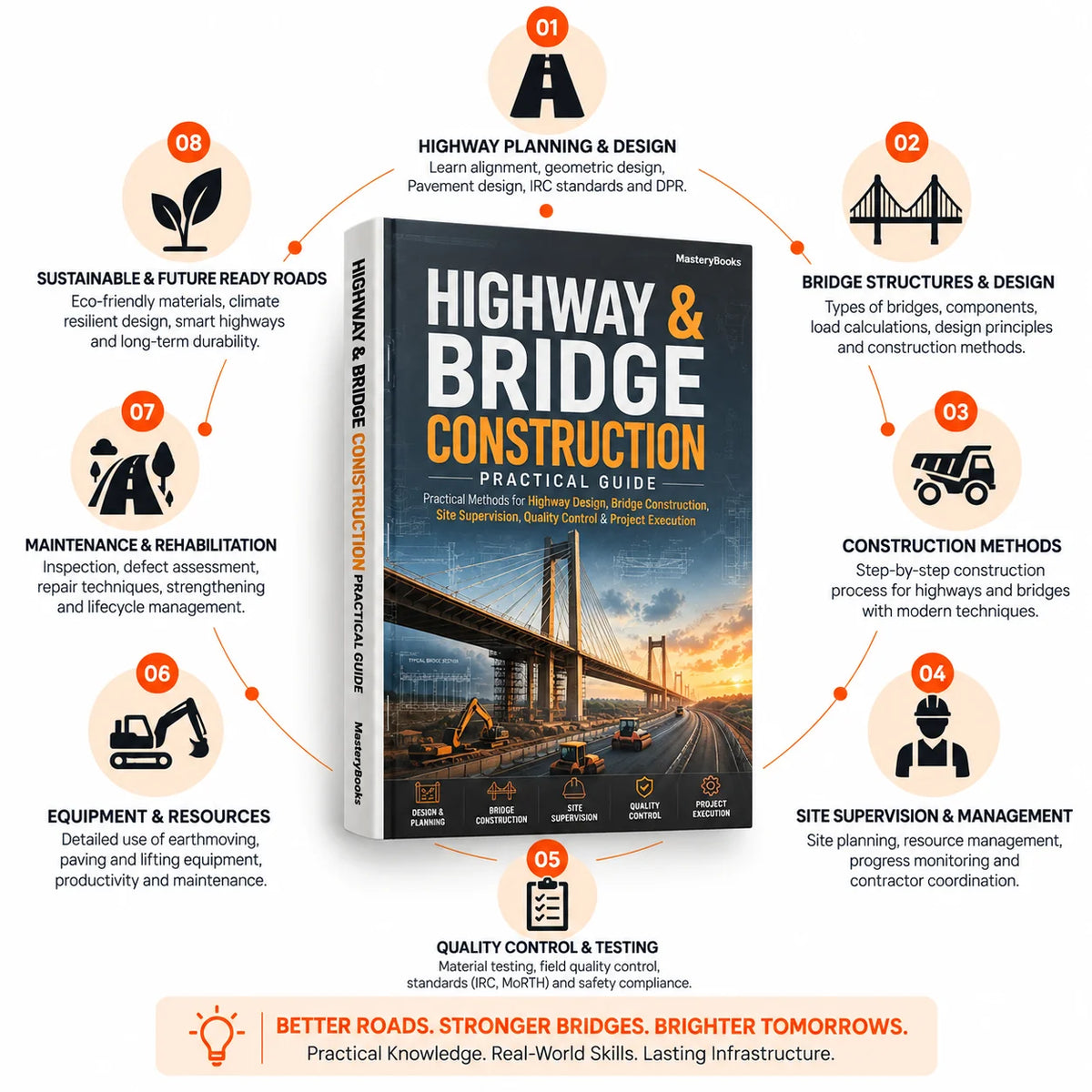
Book 2 — Highway & Bridge Construction Practical Guide: highway design basics, bridge construction, site supervision, quality control and project execution
Based on MoRTH specifications and IRC codes — the standards used on Indian government and NHAI projects
Quality control on site — material tests, field density, layer checks and acceptance criteria
Execution sequence explained step by step, the way work actually moves on a live site
Built for site engineers, supervisors, junior engineers and contractors working on road and bridge projects
🚚 Shipping & Delivery
FREE shipping across India — no hidden charges
Both books shipped together in one set
Dispatched within 24–48 working hours
Delivered in 3–7 working days to most locations
Live tracking link shared the moment it ships
Partial COD at ₹49 — pay the rest on delivery
Extra 10% OFF on prepaid orders
🛡️ Our Guarantee
Damage-free promise — replaced free if damaged in transit
2026 Edition — aligned with current MoRTH and IRC practice
100% original content, not copied from anywhere
Premium print quality on durable paper — built for site use
Secure checkout via Cashfree — UPI, Cards, Netbanking
College taught me theory, but the execution sequence on site was new. This book lays out subgrade, GSB, WMM and bituminous work in the order it actually happens, with what to check at each stage. It sits in my site office now.
✓ Verified Purchase
Manav RathoreQuality Control Engineer
★★★★★
The quality control sections are what I use most — field density, layer checks and acceptance criteria, all explained against MoRTH practice. It makes it much easier to answer the consultant confidently during inspection.
✓ Verified Purchase
Siddharth IyerBridge Site Engineer
★★★★★
Bridge work needs a lot of coordination between stages. The highway and bridge book explains construction flow and site supervision in a practical way. Good reference for planning the next activity before the current one finishes.
✓ Verified Purchase
Kunal DeshmukhJunior Engineer, Civil
★★★★★
Very helpful in my first year on a road project. IRC and MoRTH references are explained in simple site language instead of copying the code. I finally understand why each check is done, not just what to note down.
✓ Verified Purchase
Pratap Singh BishtRoad Contractor
★★★★★
As a contractor, rework is the biggest loss. The execution steps and quality checks help my supervisors get layers right the first time. Both books together cover road work from start to handover.
College taught me theory, but the execution sequence on site was new. This book lays out subgrade, GSB, WMM and bituminous work in the order it actually happens, with what to check at each stage. It sits in my site office now.
✓ Verified Purchase
Manav RathoreQuality Control Engineer
★★★★★
The quality control sections are what I use most — field density, layer checks and acceptance criteria, all explained against MoRTH practice. It makes it much easier to answer the consultant confidently during inspection.
✓ Verified Purchase
Siddharth IyerBridge Site Engineer
★★★★★
Bridge work needs a lot of coordination between stages. The highway and bridge book explains construction flow and site supervision in a practical way. Good reference for planning the next activity before the current one finishes.
✓ Verified Purchase
Kunal DeshmukhJunior Engineer, Civil
★★★★★
Very helpful in my first year on a road project. IRC and MoRTH references are explained in simple site language instead of copying the code. I finally understand why each check is done, not just what to note down.
✓ Verified Purchase
Pratap Singh BishtRoad Contractor
★★★★★
As a contractor, rework is the biggest loss. The execution steps and quality checks help my supervisors get layers right the first time. Both books together cover road work from start to handover.
✓ Verified Purchase
❓ Common Questions
Frequently Asked Questions
Book 1 — Road Construction Practical Guide takes you from site basics to contractor-level execution: survey, earthwork, subgrade, GSB, WMM, bituminous layers and compaction.
Book 2 — Highway & Bridge Construction Practical Guide covers highway design basics, bridge construction, site supervision, quality control and project execution.
Yes. The content follows MoRTH specifications and IRC codes — the standards used on Indian government, state PWD and NHAI projects. It explains them in site language so you know what to check and when. Always refer to the latest revision and your project's contract specifications, since codes are updated from time to time.
Site engineers, junior engineers, supervisors and contractors working on road, highway or bridge projects. Diploma and B.Tech civil graduates starting their first site job will find it especially useful, because it covers what college skips — how work actually moves on a live site.
Yes — material tests, field density checks, layer-wise inspection and acceptance criteria are covered, so you know what a layer should meet before the next one goes on top. This is the part that decides whether work passes the consultant's inspection.
This is a practical site handbook, not an exam guide — there are no MCQs or chapter-end questions. It will help you understand the subject better for interviews and practical rounds, but it isn't built around any exam syllabus.
Yes. The execution sequence, quality checks and site supervision sections help you plan work properly, avoid rework and deal confidently with consultants and department engineers. Tender rules, rates and approvals vary by state and department, so check those locally.
Free shipping across India. Both books ship together, dispatched within 24–48 working hours and usually delivered in 3–7 working days, with a tracking link shared as soon as the parcel ships. Partial COD is available at ₹49 — book with that, pay the rest on delivery. Prepaid orders get an extra 10% off.
Choosing a selection results in a full page refresh.